A proper foundation is essential when pouring concrete for any structure, whether it is an office building, driveway, a house, or a garage. If a foundation is not properly set it will compromise the integrity of the structure, which over time cracks will develop or a weak foundation that may result in severe g or sinkholes. There are precautions you can take to minimize the cracks in the foundation, for example, the placement of rebar.
Does garage floors have rebar? Yes. In order for your foundation to last over time, it is important to have rebar placed before you pour the concrete in your garage. The proper placement of the rebar is essential to ensure a long-lasting foundation without a large amount of separation or cracks.
Before any project begins involving pour concrete, it must be done with such precise measurements, proper equipment, and design for the foundation to remain stable. If anyone of these components is compromised or if a shortcut is taken, then structure becomes dangerous. Without a solid foundation, the building or structure in which rests upon it may collapse whether it is cracking and sinking.
What Is The Proper Technique To Apply Rebar For A Garage Floor?
There are 6 significant steps to take prior to pouring concrete for your garage, and applying rebar properly is one of them. Here are the steps:
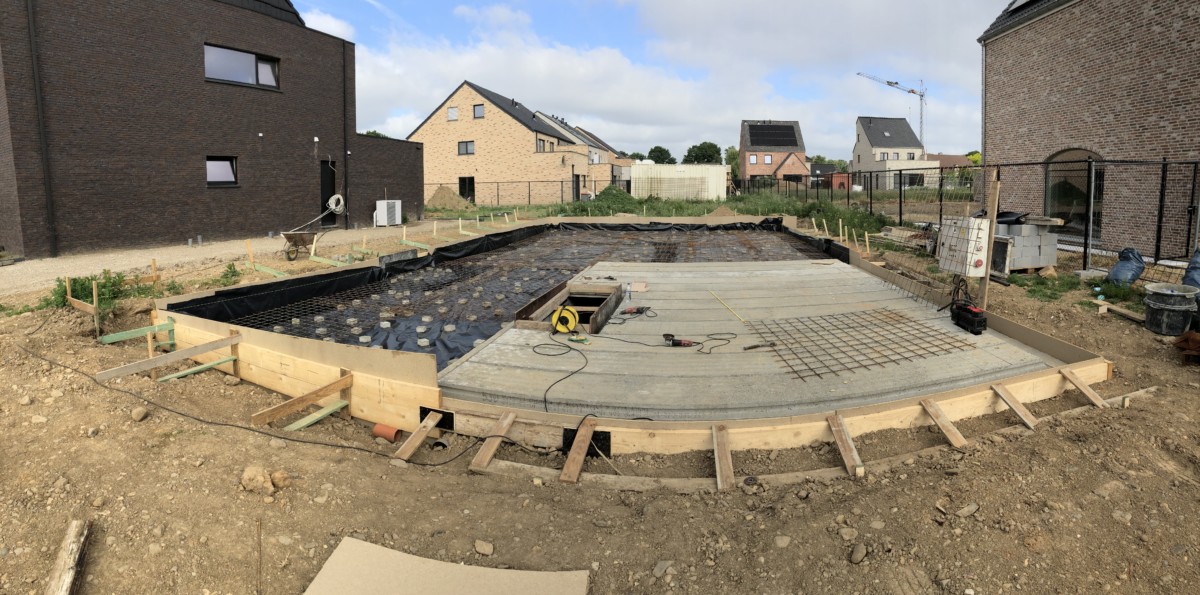
Removing the topsoil. This is ground preparation. If the soil has NOT been raked, dug, or disturbed, then you need to apply at least a 4-inch layer of gravel over the ground surface. However, if the ground has been disturbed or loose, then you need to compact the ground before applying the gravel.
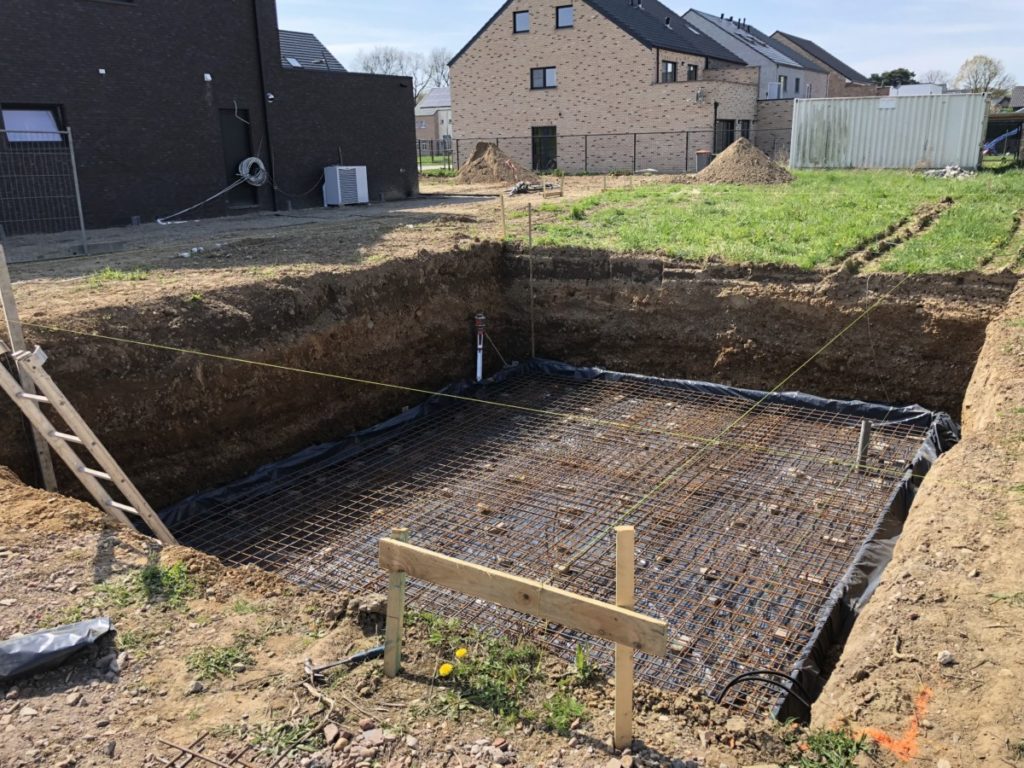
Apply the vapor barrier. This consists of thick sheets of plastic covering the gravel. This acts as a barrier to prevent water movement once the concrete is poured. Concrete has pores, and the ground has small amounts of moisture in the dirt. This vapor barrier keeps the concrete clean and “dry” for a strong foundation. Be sure to use sheets that are for the purpose of pouring concrete.
[googleadsycc adunit=”inarticle”]
Mixing the concrete. Correctly mixing the concrete is extremely important to set a strong and solid foundation. Too much water makes a loose and week concrete. The professional term is called “compressive strength,” and it does vary on the ratio requirement depending which part of the country you live in.
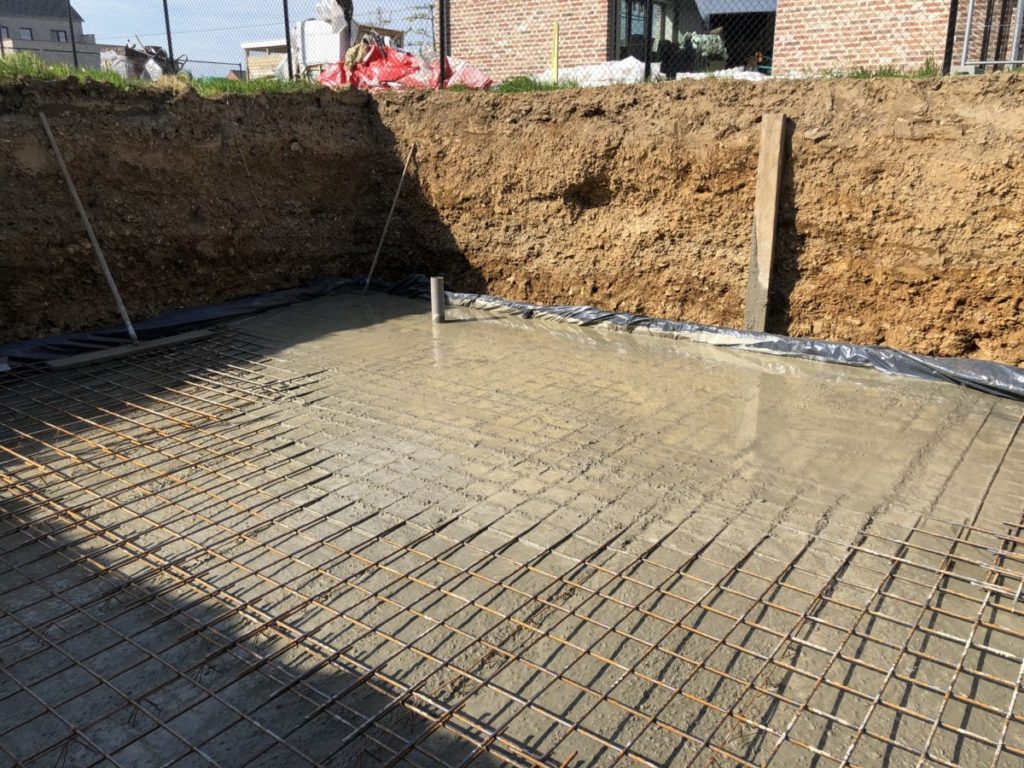
Rebar. Before you finish pouring the concrete, you must lay the rebar. The rebar is placed over the plastic barrier. This is considered optional only if every other component is done properly, such as the concrete mixture, vapor barriers, and ground preparation. However, it is recommended to place rebar as another level of reinforcement for the foundation. Rebar setting should be placed in the middle of the concrete pour rather than at the bottom.
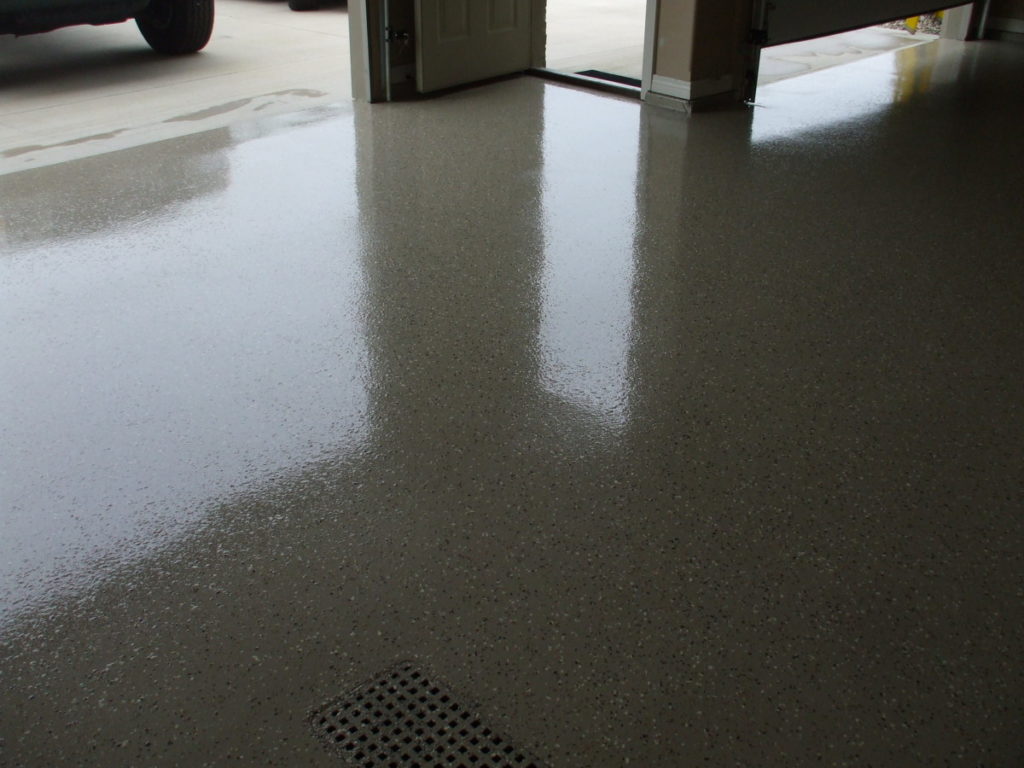
Finishing. Once the concrete is poured, the final step is “finishing and curing.” This “finishing” process is smoothing out the concrete creating a flat and even surface. As you are leveling out the concrete for the final foundation, most contractors will place expansion grooves by cutting into the wet concrete to avoid or minimalize cracks in the result.
Curing. A chemical method that is applied after the finishing or leveling out of the floor. Curing is applied to the top layer and keeps the top slightly wet as the rest of the concrete “sets.” This is just an extra precaution, but it will save time, money, and the appearance of your foundation in the years to come. Website: https://www.concretenetwork.com/concrete/slabs/curing.htm states there are 2 main purposes for the curing chemical process.
It keeps moisture in the concrete as it sets or dries as it strengthens
Delays shrinking until it is strong enough to prevent cracking
They also offer unique and helpful tips for the chemical curing process. Any project involving the pour of concrete for any foundation, it is always wise to take every precaution to ensure your final product is built to last. When shortcuts are taken, not only does it expedite the age, but it is also very dangerous. A garage is usually attached to a home or living structure so when a garage floor is cheaply done, then it may cause the other structure to deteriorate before its time.
[googleadsycc adunit=”inarticle”]
Are There Different Types of Technique For Concrete Foundations?
Yes, there is, and it does depend on the area where you are building and the actual type of project you are constructing. There are 3 types of foundations: T-shape, slab-on-grade, and frost protected.
T-shape: often used in colder climates.
Slab-on-grade: This method is used in warmer climates and reinforces the rebar and holds it in place.
Frost protected: this type of foundation is used for heated structures. It has two sheets applied one is used for the outside of the foundation, and the other placed on the gravel. The purpose of this method is for insulation and often used for heated structures. Frost protected is the utmost preference when laying the concrete for any heated structures.
For complete detailed process on these 3 types of foundation a helpful website to read is:
Each type of foundation has strict codes to follow, which will ensure the outcome will produce a strong solid structure. Many contractors in the field strongly suggest allowing enough time and money to complete each process in completion. It is a sad tale when a beautiful building is constructed only to fall apart just because a few short cuts were used on the building of the foundation.
[googleadsycc adunit=”inarticle”]
Other Tips To Assist A Proper Layout For Your Foundation
Soil. Different types of soil and environment all play a part in having the proper mixture ratio. It is known to place what is called “plasticizers” in the mix to ensure the strength of the concrete. Too much water can make the mixture weak, and too little proves to be difficult to pour. Adding the plasticizers to the mix will keep the concrete strong without having any effect on the stability or ratio.
Environment/Climate. If you happen to live in a cold environment, it is wise to include “air-entraining agents,” which is a special type of fiber that reinforces the strength of the foundation. When concrete is poured in colder climates, there is a threat of the “freeze-thaw” effect. The concrete can freeze but when it thaws the extra water will seep into the concrete mixture making the mixture weak. The addition of the fiber keeps the integrity of the concrete.
Expansion Joints. As the concrete “dries,” there is an expansion and shrink process. Expansion joints are used when the concrete goes through the process of expansion. The joints absorb the expansion and eases the stress on the foundation.
You’re getting
ready to build your dream house, but the architect has said something that has
brought you a bit of pause: “The garage floor slope will be at a .0416 pitch.”
Wait. What? Pitch? Do you mean that in the same way we say, “the roof has a
pitch?”
Do garage floors
have to slope? In a word, yes. Most local municipal building codes require a
one-eighth inch, one-quarter inch, or even a one-half inch per foot slope for
drainage purposes.
At first glance,
this may seem like a steep grade but hang in there. We’ve tested it out, and it
isn’t even noticeable.
Why Do Garage Floors Have to Slope?
On the surface, it
may seem like you’re having a defect built into your home, but the fact is that
the sloped garage floor is intended to avoid future defects.
If your house
doesn’t have a basement, chances are pretty good that your hot water
heater/tank is in your garage. In a worst-case scenario, your water heater
malfunctions and springs a leak…all over your garage. The minute garage floor
slope encourages the water to go out the entrance of the garage instead of
creating a standing flood around your cars and items you have stored.
Your homeowner’s
policy may or may not cover the damage if your garage floor is properly poured
– it depends on your policy. You definitely will not be covered, though,
if you don’t have the correct grade to your garage floor.
Why Isn’t There One Standard for the Slope of a Garage
Floor?
Local building
code standards are based on your state’s building code. And believe it or not,
the state building code is based on an international residential building code
standard.
Some of the things
that come into play when architects and contractors are preparing your land for
a new build are:
Type
of soil
How
compact is the soil? Does it need additional reinforcement and deeper footings?
Is it sandy and likely to shift? Maybe it’s hard clay that could crack and
needs to be shored up.
The
water table
Do
you live in New Orleans, where the water table can easily raise above ground
level in many areas? Maybe you live in Arizona, where the ground is really
hard, but seasonal monsoons quickly leave standing water everywhere.
If
standing water is likely, or you have a high water table, the chances are that
you can end up with water seeping up through the concrete if it isn’t properly
prepared.
Deep
freezes
Do you live in International Falls, Minnesota, where you can count on the ground’s frost depth getting down three-to-four-feet? The constant hardening and thawing of the ground creates a different type of issue. Not only does the spring thaw make the ground extra damp, the freeze and thaw also contract and expand the ground.
[googleadsycc adunit=”inarticle”]
General Garage Slope Standards
When you think of
the slope in terms of the total garage depth, it may seem a bit extreme, but it
really isn’t.
Minimal garage
depths are about 18-feet. Many new standard construction garages are about
20-feet deep. Desirable depths for garages are at least 24-feet.
Using the two
extremes of the minimal garage depth of 18-feet and the maximum slope of
1/2-inch per foot ends up looking like this:
18 feet deep x .5 inch per foot = 9 inches
A nine-inch slope
sounds like a lot, doesn’t it? Are you having visions of hilly San Francisco’s
Lombard Street? Don’t panic. It’s really not as much as you think.
Try this
experiment to see what a garage floor slope looks like in real life:
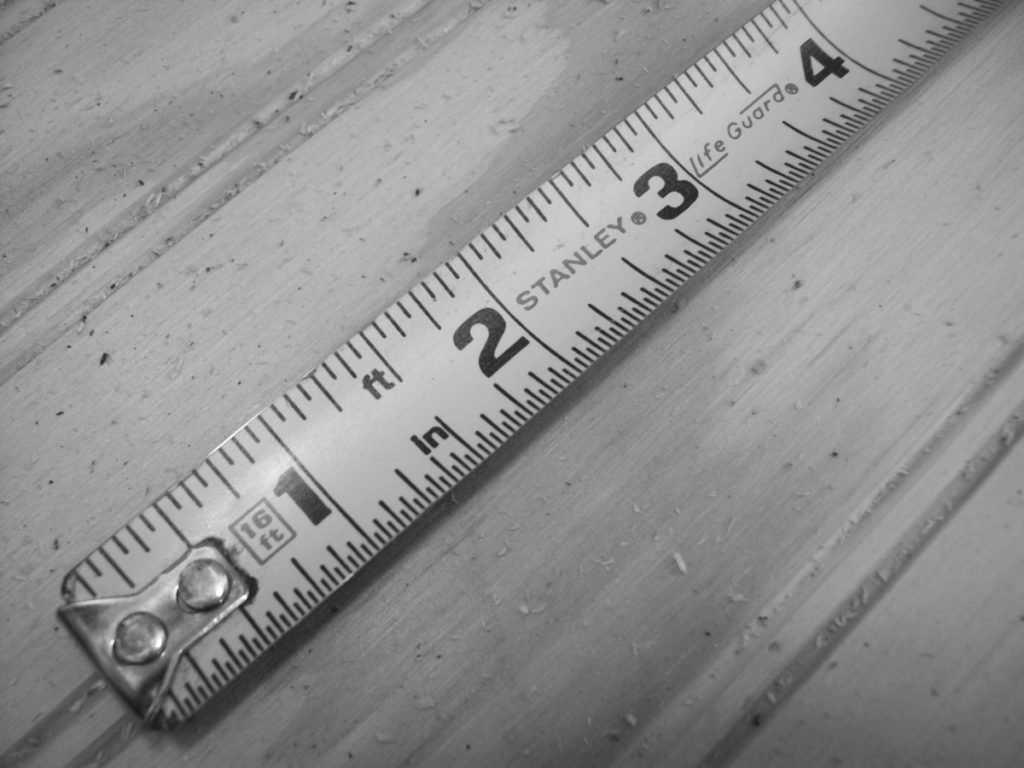
Measure 9” from the floor (or the ground)
and make a pencil mark on the wall.
Ask someone to hold the beginning end of
the tape measure level with that mark you just made.
Stretch the tape measure to 18.5 feet.
Lay the spooling end of the tape measure on
the ground and mark 18-feet by gently setting your foot at that measuring point
on the tape measure.
Roll a ball down the slope
Take note of the
slope and the slowly rolling ball. Does that seem drastic?
Granted, your ball will roll, but so will any water. That’s the idea!
[googleadsycc adunit=”inarticle”]
Garage Floor Slopes
Here are a few
more computations to give you some ideas of what you could expect based on the
size of your garage:
Garage Size
Slope per
foot
Total slope
of garage floor
18 feet
.25
(1/4 inch)
4.5 inches
18
feet
.125
(1/8 inch)
2.25 inches
20 feet
.5 (1/2 inch)
10
inches
20 feet
.25 (1/4 inch)
5
inches
24 feet
.5 (1/2 inch
12
inches
24 feet
.25 (1/4 inch)
6
inches
Here’s the thing:
you don’t want the slope
of your floor to end there. You want your driveway to continue to slope away
from your garage entrance too.
Are There Alternatives to Sloping a Garage Floor?
Some people would prefer to have a drain inside their garage, so they place it in the center of the garage.
This means that
the garage floor’s slope is a four-way slope to the drain. It’s still
imperceptible, but by cutting the total slope in half because it’s only for
half of the distance, some people feel more comfortable.
This process
requires a drainage pipe to be planned in the original architectural drawings
and set during the process of setting and laying the foundation. That said,
it’s the kind of decision you want to make at the start of the process, not a
change request you want to add later.
Another Garage Measurement Some New Homeowners Debate
While you’re
thinking about building requirements, another one that is sometimes debated is
the garage floor having to be at least four inches below the inside of the
house.
Some contractors
even suggest that this should be six-inches for a one-story house and up-to
ten-inches for a two-or-more story house.
You may wonder why
this would be a requirement.
This step-up helps
protect the house from minor flooding if the garage does have some sort of an
incident – like the hot water heater deciding that it’s done holding its
contents and wants to clean the garage floor for you. Or a summer monsoon
deciding to drop its water contents on your street.
This was a historical requirement when cars were prone to leaking gasoline and/or oil, and automobile carbon monoxide was more of a concern. Although manufacturing improvements have made that less likely, it’s not altogether impossible.
[googleadsycc adunit=”inarticle”]
Accessibility of the Garage
If you, or someone in your household, has accessibility challenges, it’s easy enough to also plan to have a ramp built in place of the step (or steps) to get into the house from the garage.
If you want the
garage to be the place where the kids or grandkids love to play, this is
another good reason to have a ramp. Skateboards, marbles, toy cars, scooters, who
knows what all will be rolled down that slight ramp?
Do the Same
Standards Apply to Detached Garages?
The drainage
standards will still apply regardless of whether your garage is attached to
your residence or is a detached workshop.
Another way to
think about it is that it’s so much easier for you to hose off your garage
floor if you can start at the back of the building and move toward the front as
the water drains out ahead of you.
You could choose to think of the garage floor’s slope as a simple convenience feature to help make your life easier.
Nearly
anyone looking to buy a home would want a garage, but for most, it is not used
as a main living space, so when you see the square footage of a home, you have to wonder if it is counting the
garage or not.
So,
are garages part of square footage? No, garages aren’t considered part
of the livable space inside a home, and therefore, the garage doesn’t count as
part of the overall square footage for the home.
There
are a lot of factors that come into play when it comes to how square footage is
calculated for a home. If you are thinking about purchasing a home or selling
your home, keep reading! We have all of the important information you need to
know about square footage before you start.
Does a Garage
Count as Square Footage?
It
might be a shock that garages don’t count for the overall square footage for a
home, but they aren’t considered livable space. It doesn’t matter if the garage
is attached to the home or if the garage is a detached garage, it won’t count
toward the square footage of the home.
What if
You Convert the Garage?
Some
people may be wondering if they convert their garage into a bedroom or living
space if that would change the way the garage is viewed when it comes to
listing a home. The answer to that is yes, in most cases. If you have the
proper permits need by your county to convert your garage into a livable space,
you can convert your garage and count the area as part of your square footage.
Square
Footage: What Is and Isn’t Included
Although
you should always hire a professional to calculate the square footage of your
home, it’s always a good idea to have a basic understanding of what is included
and not included in the listing. Appraisal
IQ has
a great list of what is included and not included when calculating square
footage.
This information is based on an appraisal company located in Texas. The requirements of what counts toward square footage and what doesn’t could vary from state to state. However, most states are going to be the same or very similar to what is listed in this article.
[googleadsycc adunit=”inarticle”]
What
appraisers included when calculating the square footage of home:
The biggest thing that appraisers include when looking at what can be counted toward square footage, interior livable spaces. This includes any living rooms, bedrooms, and bathrooms.
If you have an enclosed patio that is heated the same way that your home is, your patio could be counted toward your overall square footage. The patio has to have a similar structure and quality as the rest of your home.
When it comes to attics, they can count toward your square footage if they are finished and have a total of seven feet in clearance from the floor to the ceiling. If the space is livable and not just a room used to store old Christmas decorations, the appraisal company might include the room. When you convert an attic into livable space, it’s no longer considered an attic and more of a bedroom or multi-purpose living area.
The appraiser will also include all closets located within the interior of your home if your home has a utility room, and staircases are part of the final numbers.
If your garage is attached to your home and you have a living area separate from the garage above the garage, that area will count toward your square footage.
[googleadsycc adunit=”inarticle”]
What
appraisers do not include when calculating the square footage of a home:
If your patio is open or has only a screen as part of the walls, you can’t include it within the home’s square footage. As listed above, the only way you can include a patio is if it is finished and is livable space with heat.
We already touched on whether or not garages count as square footage, and they don’t. Now, if you have converted your garage into a livable space and it no longer has the function or ability to hold a vehicle, you can count that space as part of the overall home square footage.
Your appraiser will also not count any unfinished areas of the home regardless of where the area is located.
If your home has a large open airway, it won’t count. This includes areas above the stairs on the second floor.
The biggest debate on square footage is probably the basement. A lot of people finish a basement and use it as a livable space. However, the basement is not included in the square footage of the home. It will be listed differently on the home listing. Always include that you have a basement, and if the basement is finished or partly finished, include that with the information on the basement.
If you have any outbuildings that are not attached directly to your home, they do not count. This would include storage sheds that are used for multiple purposes, pool houses, or any kind of guest house that is separate from the main house. You will want to list these buildings as extra space that is available when you are listing your home, just remember, that they are not officially part of the square footage of the house.
If a room requires you to leave the main house to access the area, you cannot count that area as part of your square footage.
Remember,
things can vary from state to state based on the requirements they set on home
listings and what can or can’t count. If you are going to be listing a home,
make sure you check with your state’s specific requirements to make sure you
are listing the appropriate spaces when listing your home.
Do You
Measure Square Footage Inside or Outside?
In
most cases, the appraiser will calculate the overall square footage of the home
from the outside of the house. This is why your numbers from the inside may not
match with what is calculated from outside. They have to take into account the
thickness of the walls, and that will add to the square footage total versus
what you have calculated on the inside of your home.
Who
Should Calculate the Square Footage of a Home?
If
you are going to be listing your home, make sure you are listing your home with
the correct square footage. It might seem like it can be an easy task, but not
just anyone should be calculating the square footage.
The homeowner or real estate agent shouldn’t be the ones to calculate the square footage of the home they are listing. You are going to want to hire a professional to make sure it is done correctly. A licensed home appraiser is a person that you should call to come out and measure your home for the listing. They know exactly what they can and can’t count, and the official way to do it.
[googleadsycc adunit=”inarticle”]
In
Conclusion
If
you are looking to list your home or you are in the market to purchase a new
home, make sure you are paying close attention to the listing. That is where
you are going to see the home’s square footage. If you see that the home has a
finished basement or standard garage, remember that those spaces do not count
toward the square footage on the listing.
If you ever have any questions about your home and if something will count toward your square footage, make sure you check your state’s requirements or reach out to a local appraiser to find out any additional information.
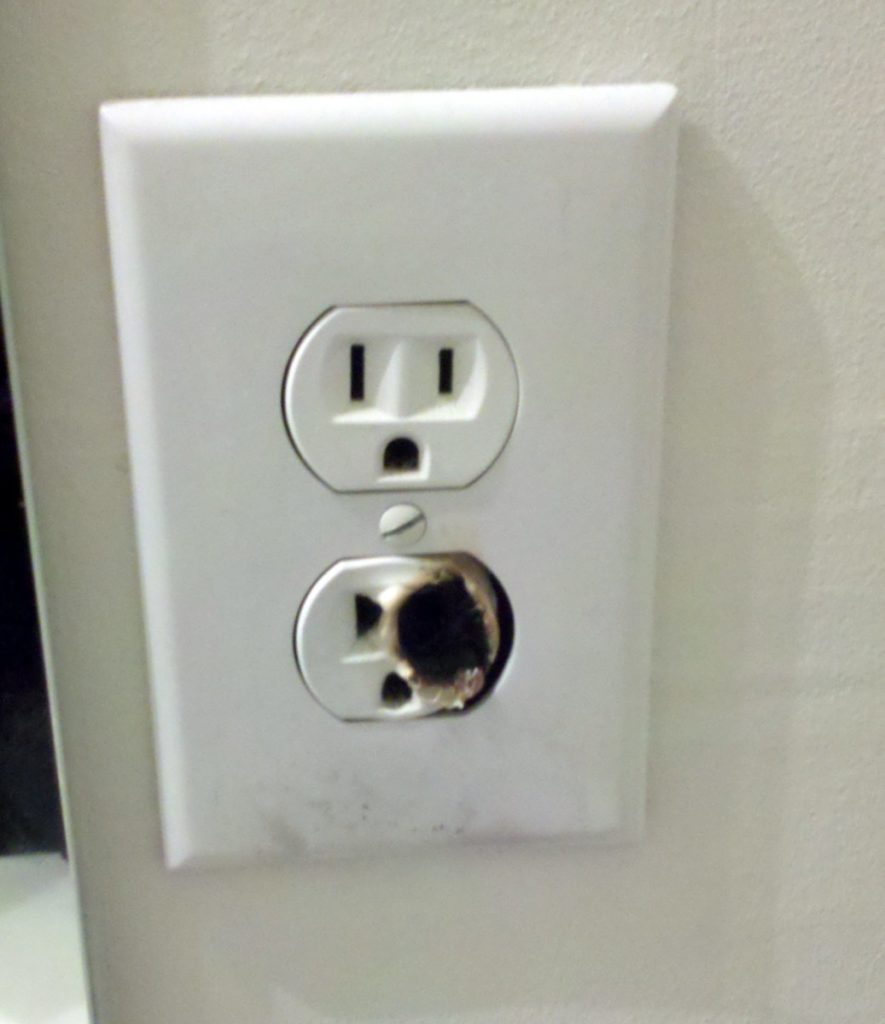
One of my garage outlets has been on the fritz
and needed replacing. In trying to solve this electrical problem, I learned a
bit about garage outlet requirements. Turns out, you cannot use any old outlet
as a replacement.
Do all
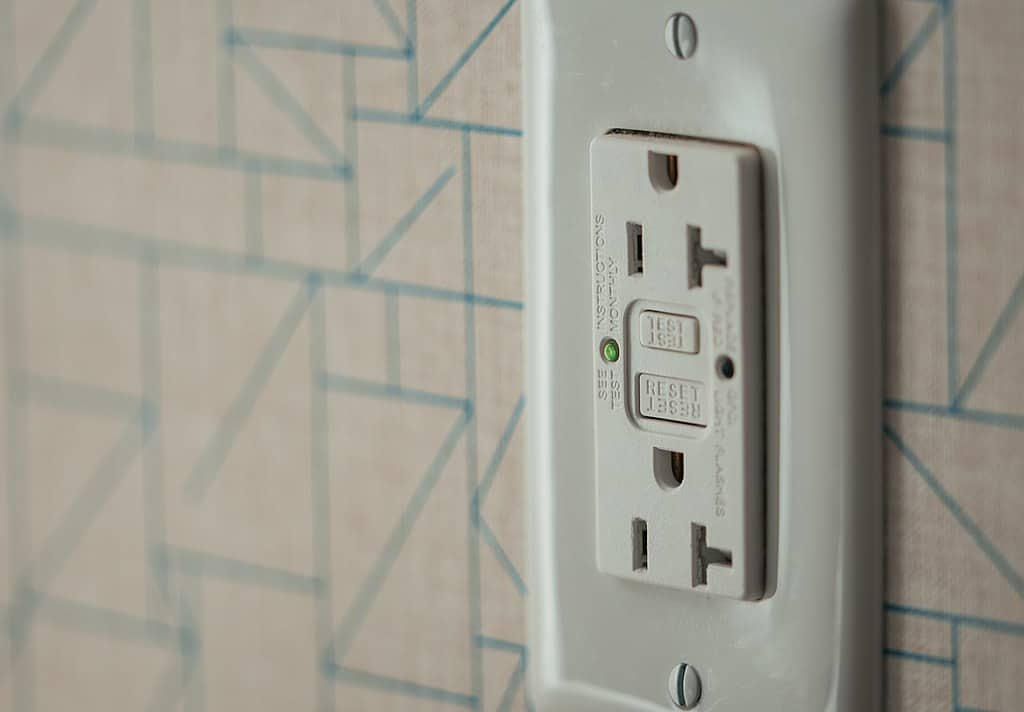
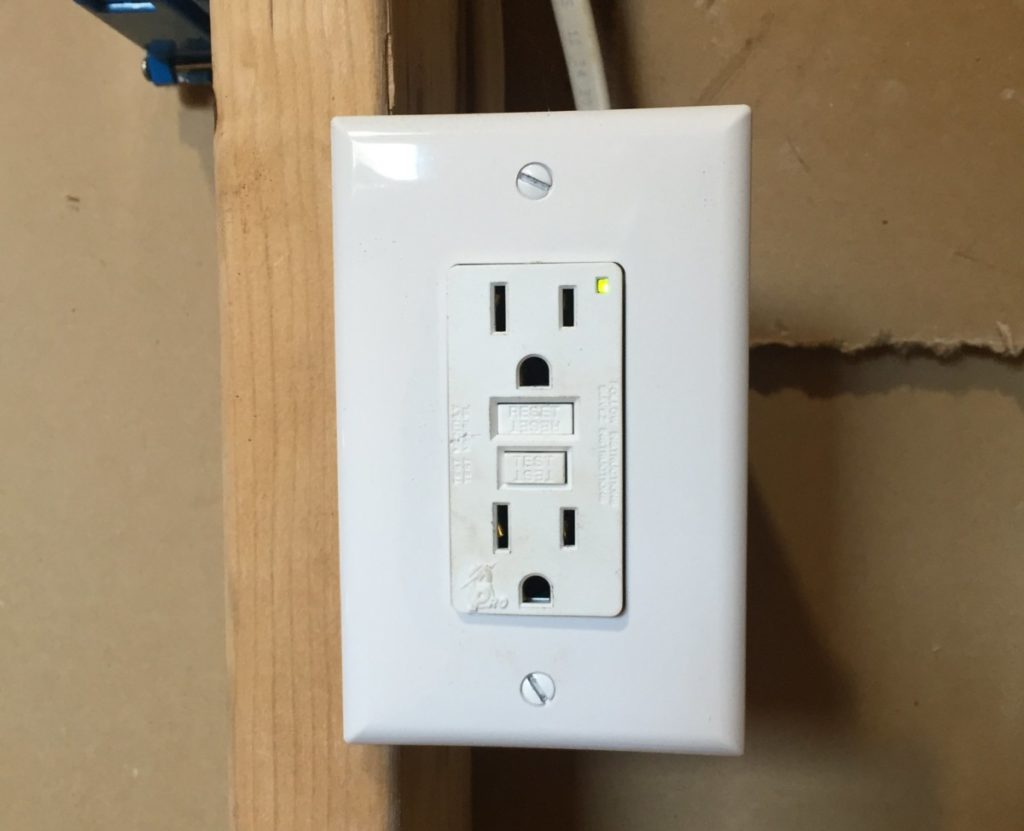
garage outlets need to be GFCI? All garage outlets must be GFCI. Ground-fault circuit interrupters
protect users against shock by cutting off the power when they sense a short. It
is an electrical violation to have non-GFCI outlets in your garage. The NEC
(National Electrical Code) made this a requirement in 2008.
GFCI outlets in your garage can save you from
electrical failures and shock. It’s important to install GFCI outlets so that
you stay safe. Learning a little bit about them and how they work is also
helpful because replacing outlets on your own can be dangerous. If you have a
bit more knowledge about them, talking to electricians will be a little easier,
too.
Why All Garage Outlets Need to Be
GFCI
GFCI outlets keep you and your equipment safe.
While the garage is where people are most likely to plug in tools, it is also
one of the places in your house that is most prone to electrical outlet
interference. Your garage has a number of potential electrical problems by
nature of its location and function including:
Worn insulation
Moisture
Dust
Old appliances/cords
Any one of the above can interfere with the
electrical current in your outlet and cause a “ground fault.” A ground fault is
one of the most common electrical faults. So, stopping them from happening will
fix most of your electrical faults.
No matter the cause of the ground fault,
GFCI outlets in the garage help prevent you and your equipment.
Safety First
Garages are prone to weather, changing
temperatures, dust, other particulates, and a number of other factors that can
put your outlets on the fritz. Since you cannot fight all these potential
ground fault causes, it is important to have some defenses against their
detrimental impacts.
GFCI outlets are important because nothing else protects you from ground faults as effectively. Even if you follow all the other safety precautions around electricity use in your garage, without GFCI outlets, you will still be at risk of a ground fault. Therefore, if you find one of your outlets happens to not be GFCI, do not use it until you replace it.
It might be frustrating to be down an outlet, but it isn’t worth the risk. If you are tempted, just remember, GFCI outlets aren’t your first line of defense against ground faults: they’re your only defense.
[googleadsycc adunit=”inarticle”]
Resale Value
In addition to being a safety hazard, non-GFCI
outlets in your garage can pose a problem when you try to sell your house. By
law, appraisers are required to look for and note any electrical violation.
Since GFCI outlets are required under the NEC, a non-GFCI outlet would count as
a violation. Electrical violations such as this one can decrease the value of
your home and/or make it harder to sell.
Thus, for both your personal safety and to prevent complications when trying to sell your home, it is important that all your garage outlets are GFCI.
What Is a Ground Fault?
A ground fault is what happens when there is
an uneven electrical current in your outlet. For an outlet to function
properly, there needs to be an equal flow of electricity in and out of it. If
there is an imbalance, the excess energy will head straight for the ground hence
why it’s called a ground fault.
Often times, the quickest way for electricity to get to the ground is through you. Otherwise, it is probably through your tools. Neither option is ideal. The former can result in a shock and the later in electrical failure.
[googleadsycc adunit=”inarticle”]
What Does GFCI Stand For?
The name of the GFCI outlet makes it easier to
comprehend what it actually does. The GF in GFCI stands for “ground fault.” The
“CI” stands for “circuit interrupter.” This name accurately reflects what they
accomplish. To protect you against a ground fault, they interrupt the circuit.
How GFCI Outlets Work
So, we’ve figured out that GFCI outlets
interrupt troublesome circuits, but how do they know when there is an issue? It
turns out there is a relatively simple way for these outlets to detect
disturbances in the environment.
Outlets need an equilibrium of electricity
flowing out of them and into them when they are in use. When a GFCI outlet
detects that there is an imbalance in the electrical current, it will interrupt
the circuit. This interruption will stop the flow of electricity. This
process blocks the excess electricity from escaping the current and heading
towards the ground (through you).
Before I did research on how to replace my
outlet, I admit, I thought electricity only flowed out of an outlet. (It is
called an OUT-let after all). I found this Energy
Education Council (EEC) had a lot of useful information about how GFCI
outlets work. It also helped answer some of my other outlet-related questions.
Preventing ground shock is another important
topic because it underscores how serious they can be. Just how much of a shock
you get or the degree to which this imbalance will impact your tools – and you
– is dependent on how heavy this imbalance is. A strong imbalance is especially
dangerous. In severe cases, imbalances can result in death.
Not Only Garages: Where Else You Need
GFCI Outlets
So GFCI outlets are required in your garage;
what if the place you’re wondering about isn’t technically a garage? The answer
then is, probably. The GFCI outlet requirement applies to a number of other
places around your house.
Before I started paying attention to the
outlets in my garage, I had no idea just how common they are. GFCI outlets are
everywhere. If you are an electrical novice like me, you might not realize that
you actually know what a GFCI outlet looks like too. (Hint: they are the
outlets with reset buttons like in your bathroom).
In addition to your bathroom, there are a
number of places in and around your home that also require GFCI outlets. This
list includes:
Appliance outlets
Countertop outlets
Unfinished basements/crawl-spaces
Accessory buildings (finished or
unfinished)
Workspaces (like your garage)
Permanent pools
Temporary structures
The NEC has a lot of specific guidelines for where else needs GFCI outlets. If you aren’t sure whether or not a location on your property needs a GFCI outlet, try this EC&M reference. It details the full list of locations and references which bit of the NEC code applies to that space. It even has graphics to clarify.
[googleadsycc adunit=”inarticle”]
How to Install GFCI Outlets
If you’re like me, you don’t install GFCI
outlets. Electricity is dangerous. Unless you are qualified and accustomed
to dealing with wiring, it is better to let a pro handle replacing your outlets.
GFCI outlets are required in garages for safety reasons. Do not defeat the point of this requirement by trying to install one on your own unless you are totally confident in your electrical abilities.
Fortunately, for those of us who aren’t skilled in electrical work, replacing outlets is a relatively simple and inexpensive task for electricians. Certainly, it would be cheaper to replace them on your own. Once you factor in time and safety, however, it is almost always worth it to hire help for this type of project.
Being safe during a
tornado means having a plan in place before a tornado hits. Tornados tend to
occur suddenly, and even though the technology to predict tornados is improving
continuously, tornados are still unpredictable. Knowing where you should go to
stay safe is essential.
Are garages safe in a
tornado? Because of numerous issues with safety regarding a garage in a
tornado, garages should not be considered an adequate tornado shelter.
The lack of interior
walls and a large garage door make a garage unsuitable as a tornado shelter. This
article will further explain why garages are not the best tornado shelters and
will discuss some ways to ensure you and your family are safe in case of a
tornado.
The Garage Door
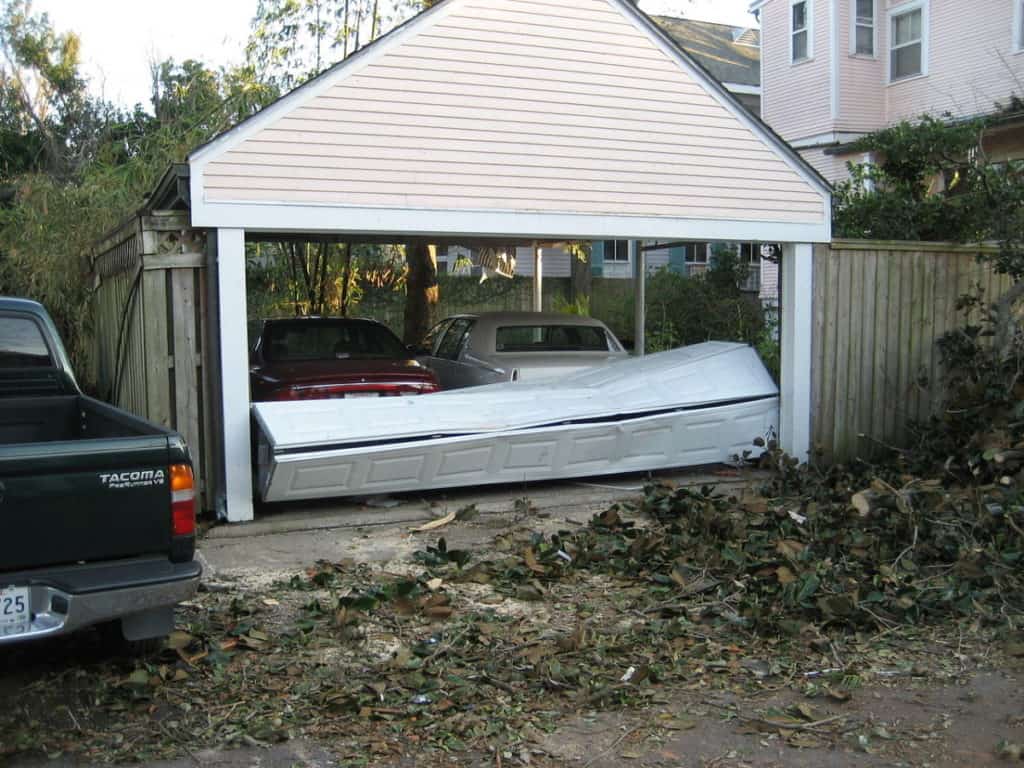
Garage doors are very
convenient when getting your car in and out of a garage, but the door itself
is a weak spot for a house in the event of a tornado.
The garage door is also
the largest opening of a home, and it is most likely to fail rather quickly in
a storm. If a storm blows the doors in or out, the pressure can build up,
causing the supporting walls or even the roof to lose their integrity. This
is called negative pressure.
This negative pressure creates a vacuum, resulting in an updraft, which causes structural damage and creates a space not suitable to protect people in a tornado.
[googleadsycc adunit=”inarticle”]
Wind Speeds and Garage Doors
If you live in an area known for tornados, it might be prudent to consider the strength of a new garage door, and the wind speed at which the garage door might fail. A study by Aaron L. Jaffe, et al., titled ‘Wind Speed Estimates for Garage Door Failures in Tornados‘ discusses the wind speeds at which garage doors fail.
In their testing, they
noticed that roof failures on houses during tornados are closely related to the
garage doors and windows. The study found that stronger doors did better,
but other factors contribute to the integrity of the garage door as well.
Specifically, the rollers, tracks, and fasteners fail as soon as the door does.
Since the impact of
failing garage doors is a significant concern, the garage is not the first
choice for a homeowner to seek shelter in the event of a tornado.
Can You Secure or Reinforce a
Garage Door?
Taking the time to secure and reinforce a garage door could help your garage door be less vulnerable to high winds. Light garage doors are economical and easy to open but letting in the wind can create problems.
What to Keep in Mind
If a storm is coming
already, it is too late to think about the garage door. Planning is essential.
Evaluate the sturdiness of your door hardware, such as the anchor, track, and springs.
Consider a door brace for your garage door. These systems reinforce the seams of the door. You might need stronger hinges and a more reliable center support system.
If you decide to buy a new door, be sure to evaluate the wind pressure rating of the door to ensure your home and garage is as safe as possible.
Tornado Wind Speeds and Garage
Doors
According to the Commercial and Residential Garage Door Technical Data Sheet distributed by Door & Access Systems Manufacturers Association International (DASMA), some cities have adjusted their building code to include garage doors designed to handle tornado wind speeds.
Tornado Ratings and Wind Speeds
Tornado Rating
Wind Gusts MPH
Expected Damage
EF 0
65-85
light
EF 1
86-110
moderate
EF 2
111-135
considerable
EF 3
136-165
severe
EF 4
166-200
devastating
EF 5
+ 200
absolute devastation
What Is the Difference Between
Tornado Proof and Tornado Resistant?
Because a tornado can create winds over 200 miles per hour, it isn’t very easy to claim something is tornado proof. The term tornado resistant is used to describe the most durable building products.
[googleadsycc adunit=”inarticle”]
Do Tornado Resistant Garage Doors
Protect the Entire House?
Since the garage door is
usually the weakest part of a home, it is blown in rather quickly in a tornado.
This allows air to rush in, the home to become pressurized, and, if the wind is
strong enough, the wind seems to explode the walls and ceiling out.
In ‘First-Ever Building Code Requires Tornado Resistant Garage Doors,’ published by Door + Access Systems, it is explained that the city of Moore, Oklahoma’s mayor changed building codes for the city to include wind-rated garage doors. Researchers in Moore noted the homes with the most structural damage had a garage door failure that was breached first by the winds.
Granted, even a highly
rated garage door cannot keep a home and its occupants safe during an EF 5
rated tornado but having a garage door that can resist winds up to 135 miles
per hour can save lives.
Researchers who
traveled to Moore to evaluate damage concluded the following:
The homes in areas with lower wind speeds failed
at the garage door openings.
If the garage door was lost, the consequences of
property damages were high.
If the garage door fails, pressure builds up in
the garage.
Garages that stick out from the primary footprint
of the home are more vulnerable compared to garages that are a part of the home
structure.
Damage to homes began at the garage.
What Is the Building Envelope?
The Federal Emergency Management System (FEMA) coastal construction manual discusses what is referred to as the building envelope and why it is essential in homes faced with high winds. If you think of a home as something that separates the occupants from the outside environment, the outside of that home is the building envelope. It is the outer shell that keeps us safe.
Wind hitting a building
can increase the pressure on the inside of the building, creating a positive
pressure, or it can build negative pressure by decreasing the pressure. These
pressure changes happen if the building envelope is not sound enough.
Storm Shelter Location in a
Garage
Some homeowners wish to install
a saferoom shelter in their garages. These saferooms can be used as a safe
place for storing valuables, a place to hide if there is an intruder, and they
are often rated high enough to handle strong tornados.
These shelters are often placed in the garage because they are bolted directly into the concrete floor of the garage. The doors will open inward in case debris is blocking the door, as well. Above ground storm shelters are popular in garages because their below-ground counterparts run the risk of flooding during a tornado.
[googleadsycc adunit=”inarticle”]
The Safest Option
In the event of a
tornado, the safest place to find shelter from the storm and the flying
debris it creates is a basement. There are risks everywhere, though. The basement
poses threats of flooding, and you may have to dig yourself out of debris if
the walls collapse above you.
The second option is
the ground level of your home.
Try to find a room that has as many walls between you and the outside wall of
the house. Additionally, interior bathrooms are great options as the
plumbing pipes reinforce the walls, they tend not to have windows, and the tub
offers extra shelter.
To Conclude
Because damage to a
house begins at the garage, it is unwise to choose the garage as your place to
weather out a tornado. Unless, of course, you have an anchored storm shelter
built in the garage.
If you lack an anchored
storm shelter, find shelter in an interior room of your home with as many walls
between you and the exterior of the house as possible. Bathrooms without
windows are great options since the pipes in the wall offer additional support.